LiFePO4 vs. Lead-Acid: The 10 Year Cost Breakdown Every Solar Wholesaler Must Know
Summary: If you are a procurement officer or solar installer, you have faced this question: "Why pay triple the price for lithium?" We strip away the marketing hype and compare these two chemistries using hard logistics and labor data.
It is a fair question. But answering it requires looking beyond the initial invoice.
At JoyHand Energy, we have supplied thousands of rack-mounted LiFePO4 batteries to commercial projects worldwide. In this guide, we strip away the marketing hype and compare these two chemistries using hard logistics, maintenance labor, and replacement cycle data. By the end, you will have the ammo you need to convert any skeptical buyer to the lithium standard.
The Upfront Cost Trap (And Why It Destroys Profit Margins)
Let us address the elephant in the room immediately.
• At checkout, a commercial-grade LiFePO4 rack system carries a higher initial procurement premium per kilowatt-hour compared to traditional lead-acid (AGM/Gel) alternatives. However, looking strictly at the upfront invoice is where the comparison ends
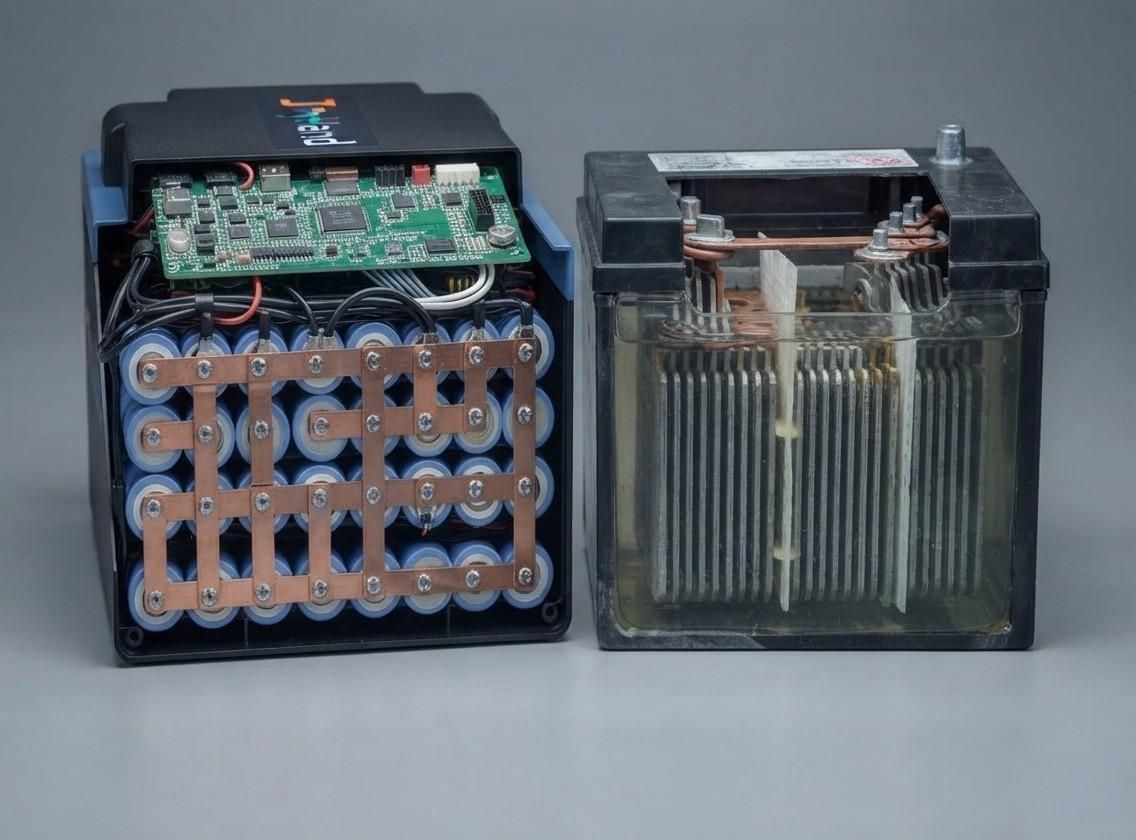
• Lead-acid batteries are consumables. You are not buying an asset; you are financing a continuous lease. Because of depth-of-discharge constraints and rapid degradation, a commercial site will cycle through three to four complete lead-acid bank replacements in the time a single lithium system is just warming up.
Total Cost of Ownership (TCO): The Real Math
The Lead-Acid Scenario
To secure 10kWh of daily usable power, you must over-provision and buy a 20kWh rated lead-acid bank to avoid discharging past the critical 50% threshold. Over a decade, factor in three full hardware replacements, alongside compounding operational expenditures (OpEx) for regular terminal cleaning, cell balancing, and distilled water maintenance.
The JoyHand LiFePO4 Scenario
Achieving that same 10kWh of usable power requires exactly one 10kWh rack-mounted unit. Hardware replacement costs over a decade drop to zero, and ongoing physical maintenance labor is entirely eliminated.
The Verdict: Over a decade, upgrading to lithium cuts your client's total cost of ownership by more than half per bank. Scaled across a 50-unit commercial development, transitioning away from lead-acid translates into massive, six-figure procurement and operational savings.
Logistics and Shipping – The Hidden B2B Advantage
As a wholesale distributor, shipping costs eat into your margins. Lead-acid batteries weigh roughly 50% more than LiFePO4 for the same usable capacity. LiFePO4 allows you to pack more units per shipping container, lower your freight insurance costs, and avoid the restrictive shipping regulations that plague corrosive flooded batteries.
Safety and Thermal Runaway: The Fire Myth Debunked
Unlike NMC chemistries, Lithium Iron Phosphate (LiFePO4) is fundamentally stable. Thermal runaway does not occur until temperatures exceed 270°C (518°F). Furthermore, LiFePO4 produces zero off-gassing, eliminating the need for expensive fire-suppression systems and specialized battery rooms required by lead-acid setups.
Why Your Clients Care About "Round-Trip Efficiency"
Lead-Acid Round-Trip Efficiency is ~80%, meaning you lose 20% of the solar energy as heat. LiFePO4 Round-Trip Efficiency is ~98%. Over 365 days, that is an extra 657 kWh of free energy per year. For a commercial operation running heavy loads, this efficiency gain alone can justify the lithium upgrade within 24 months.
Ready to Upgrade Your Inventory?
JoyHand manufactures premium LiFePO4 rack batteries in both 5kWh and 10kWh configurations, ready for bulk shipping to international distributors. We provide custom branding options (OEM/ODM) and full factory certifications (CE, RoHS, UN38.3).